







IQAC Guidelines Document
I. Introduction
As part of its Action Plan for performance evaluation, assessment, accreditation, and the overall enhancement of quality in higher education institutions, the National Assessment and Accreditation Council (NAAC), Bangalore, recommends the establishment of an Internal Quality Assurance Cell (IQAC) in every accredited institution. This initiative is intended to ensure Continuous quality maintenance mechanism in Higher Educational Institutions.
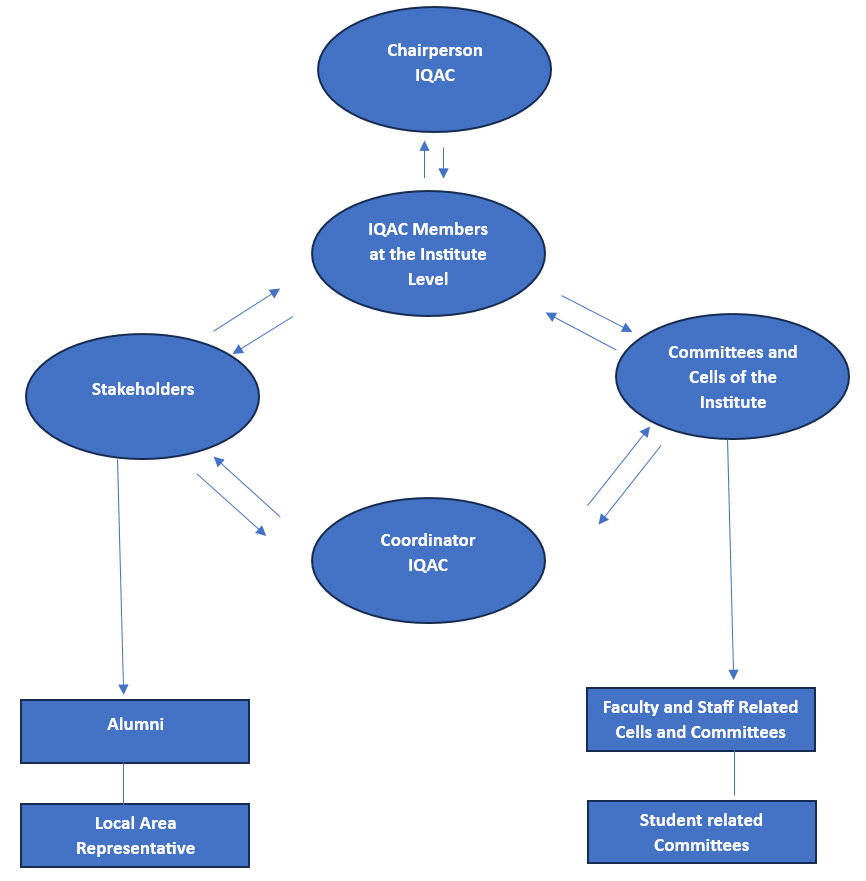
Since, quality improvement is a continuous process, the IQAC is an integral component of the institutional framework. It is dedicated to fostering and realizing the goals of quality enhancement and maintenance. Its role emphasizes on creating a structured approach for consistent, conscious, and catalytic advancement in the institution's overall performance. It is imperative to understand that IQAC is not only an administrative layer or a data collection body. Instead, it serves as a participatory and facilitative unit which engages every stakeholder in the pursuit of quality. The role of IQAC is to act as a strategic driver for institutional improvement by identifying gaps and implementing targeted & well-planned interventions.
II. Objectives of IQAC
- To establish a structured framework that enables deliberate, sustained, and impactful efforts aimed at enhancing the academic and administrative effectiveness of the institute.
- To encourage initiatives that advance institutional performance by embedding a culture of quality and formalizing the adoption of best practices across all levels.
III. Functions of IQAC
- Establishing and implementing quality benchmarks and standards to facilitate institution’s continuous academic and administrative improvements.
- Promoting a learner-focused academic environment to supports quality education, and also encourage faculty development
- Gathering and analyzing feedback from all stakeholders (students, faculty, staff, alumni, and employers) on quality-related institutional practices and processes.
- Sharing relevant information on quality parameters with all stakeholders to foster transparency and awareness.
- Conducting and supporting workshops, seminars, and training sessions on quality-related themes
- Serving as the central coordinating body for quality initiatives, facilitating the identification, adoption, and dissemination of best practices across the institution.
- Regularly conducting Academic and Administrative Audits and ensuring timely implementation of follow-up measures.
- Preparing and submitting the Annual Quality Assurance Report (AQAR) in accordance with the guidelines and prescribed parameters.
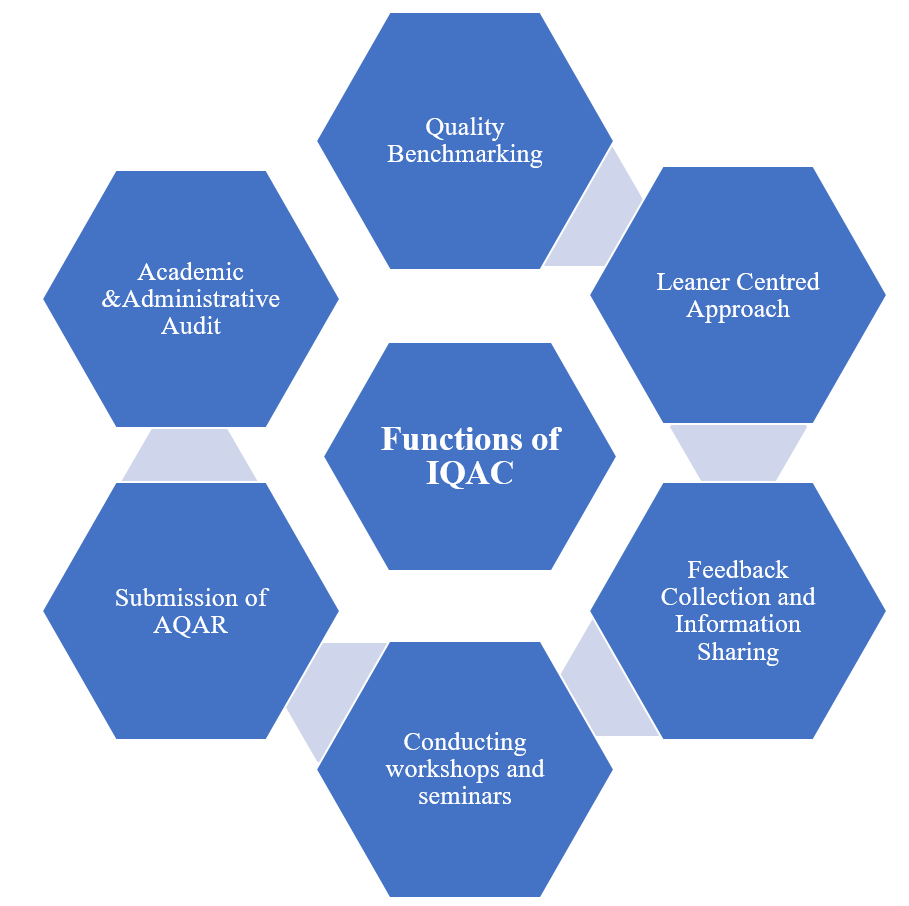
Functions of IQAC